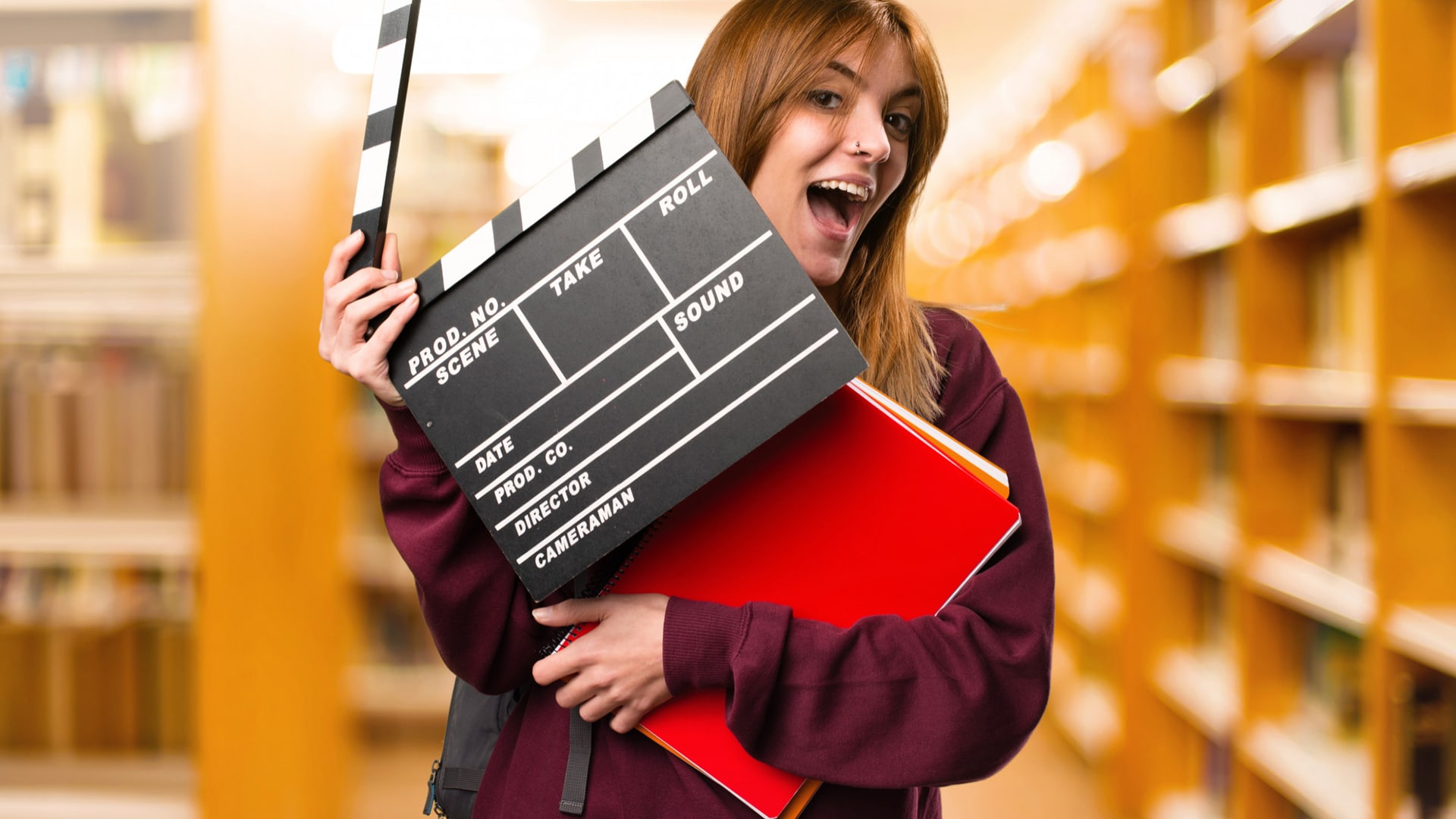
A book trailer gives readers a visual taste of a story before they open the first page.
Some trailers use illustrations, motion graphics, and animated characters. Others use actors, real locations, and film-style production. Both can create interest, but they do not work in the same way.
Animation can build worlds that would be difficult or expensive to film. A cinematic trailer can make a story feel immediate and emotionally real.
So, which one works better?
The answer depends on the book, the audience, the budget, and where the trailer will be promoted.
An animated book trailer uses designed visuals rather than filmed scenes to introduce a book.
It may include illustrated characters, moving text, visual effects, icons, maps, or fully animated environments. Some are simple and elegant. Others look like mini animated films.
Animation can show almost anything.
A dragon can fly over a burning kingdom. A spaceship can cross a distant galaxy. A talking fox can deliver a dramatic speech without anyone questioning the casting choice.
This freedom makes animation useful for books with imaginative plots or unusual settings.
The trailer does not need to recreate every event. Instead, it can highlight the book’s mood, conflict, characters, and central promise.
Authors can choose from several animation styles:
2D character animation
3D animation
Motion graphics
Kinetic typography
Illustrated scene movement
Whiteboard-style animation
The right style should match the book. A playful children’s story may need colorful character animation. A business book may work better with clean motion graphics and bold text.
Animation often works well for:
Children’s books
Fantasy novels
Science fiction
Graphic novels
Educational books
Books with abstract concepts
Stories set in imaginary worlds
An animated book trailer is especially useful when live-action filming would require expensive sets, costumes, or effects.
A cinematic book trailer uses live-action footage to present the tone or conflict of a book.
It may feature actors, real locations, costumes, props, dramatic lighting, dialogue, and professional sound design.
Cinematic trailers borrow techniques from movie marketing.
They use close-ups, suspenseful editing, emotional performances, music, and carefully framed scenes. The goal is not to tell the whole story. It is to make the viewer feel something quickly.
A thriller may use dark corridors and sudden cuts. A romance may focus on expressions, distance, and tension. A historical novel may rely on costumes and period details.
When done well, cinematic trailers can make a book feel like a major screen event.
Both formats can promote a book, but their strengths are different.
Animation creates a designed world. Every color, movement, and object can be controlled.
Cinematic footage captures real people and physical spaces. It can feel more natural, but it also depends on what can realistically be filmed.
Animated characters can closely follow the author’s vision.
Hair color, clothing, age, expressions, and even magical features can be designed with precision.
Cinematic trailers rely on casting. The right actor can add emotional depth. The wrong actor can make readers wonder whether everyone involved read the same book.
Animation usually requires illustrators, animators, editors, voice artists, and sound designers.
Cinematic production may require:
Actors
A director
Camera equipment
Locations
Costumes
Lighting
Makeup
Transport
Post-production
Neither format is automatically easy. A simple trailer can still require careful planning.
Animation provides wider creative control.
Scenes can be revised without gathering an entire film crew again. Weather, lighting, background details, and character movement can all be adjusted digitally.
Live-action production has more physical limits. If it rains on filming day, the clouds may become an unpaid creative director.
Animation can preserve some mystery around the characters. It gives viewers visual direction without making everything feel fixed.
Cinematic trailers show specific faces, voices, and settings. This can be powerful, but it may also influence how readers imagine the story.
Authors should decide how much they want to reveal.
Genre plays a major role in the decision.
Fantasy and science fiction often include creatures, magic, futuristic technology, or unusual environments.
Animation can present these elements without requiring a blockbuster budget. It can also maintain a consistent visual identity across characters and settings.
For children’s books, animation can bring existing illustrations to life. This makes the trailer feel connected to the book itself.
An animated book trailer may also help younger readers understand the tone quickly through color, movement, and character expressions.
Cinematic trailers can work well when human emotion is central.
Romance depends on chemistry, expressions, and subtle moments. Thrillers benefit from suspense, movement, shadows, and realistic danger. Historical fiction can gain depth from authentic costumes and locations.
However, these genres can also use animation. The deciding factor should be the concept, not a rigid genre rule.
Budget and schedule often determine which format is realistic.
Animation costs depend on:
Video length
Number of scenes
Character detail
Custom illustrations
Movement complexity
Voiceover
Music
Sound effects
Motion graphics may cost less than full character animation. A short, polished trailer can also be more effective than a long video that explains every chapter.
Cinematic production may include costs for actors, equipment, locations, costumes, crew members, travel, editing, and sound.
A simple one-location shoot can be affordable. A trailer with battles, mansions, horses, and foggy forests may become financially adventurous.
The concept should always match the available budget.
Animation is often easier to revise after production begins.
Text, colors, pacing, and certain visual elements can be updated digitally. Major character changes may still require substantial work, but reshooting is usually avoided.
Cinematic revisions can be more difficult. A new scene may require the cast, location, equipment, and crew to return.
Production style matters less than execution.
A poorly lit cinematic trailer may look like a school project. Weak animation may feel stiff or generic.
A focused concept, clear editing, strong sound, and professional visuals are what you get when you work with Virginia Book Publisher.
A trailer should be designed for the platforms where readers will see it.
YouTube allows longer videos and supports search.
Authors can use searchable titles, descriptions, links, and custom thumbnails. A full trailer between 30 and 90 seconds may work well, depending on the content.
Reels need a quick visual hook.
Vertical framing, large captions, fast pacing, and clear genre signals are important. The first few seconds should give viewers a reason to stop scrolling.
An animated book trailer can be adapted into short clips with moving quotes, character reveals, or dramatic visual moments.
BookTok audiences often respond to emotion, curiosity, tropes, and strong reactions.
The trailer should not feel like a formal advertisement. It should feel native to the platform.
Short edits, text hooks, trending audio, and relatable reader language can help.
A trailer can strengthen a book page by giving visitors another way to understand the story.
It may support:
Preorders
Email sign-ups
Book launch campaigns
Series introductions
Special editions
The video should not slow the page or distract from the main call to action.
Retailer platforms have different rules for video content.
Even when a trailer cannot be placed directly on a product page, it can still support external promotion. Authors can use it in ads, social posts, websites, newsletters, and launch campaigns.
Both formats can be cut into shorter ad versions.
A cinematic trailer may provide emotional scenes and human expressions. Animation may provide clearer branding, readable text, and flexible resizing.
The strongest version is often the one that communicates the genre and hook within seconds.
The decision should begin with marketing goals, not personal preference.
Decide what the trailer needs to achieve.
Is the goal to:
Build awareness?
Generate preorders?
Introduce a series?
Explain a nonfiction topic?
Drive visits to a book page?
A clear goal makes creative decisions easier.
Think about the reader’s age, interests, genre expectations, and preferred platforms.
A detailed cinematic trailer may appeal to adult thriller readers. Bright animation may work better for parents choosing a children’s book.
The format should feel familiar enough to attract the audience, but distinctive enough to earn attention.
The trailer should reflect the emotional identity of the book.
A dark mystery should not look cheerful. A humorous middle-grade book should not feel like a crime documentary.
Music, pacing, color, dialogue, typography, and editing should all support the same tone.
Authors should assess what they can realistically produce.
Access to skilled actors and strong locations may support cinematic production. Existing illustrations may make animation more practical.
An animated book trailer can also provide consistency when the book already has a strong illustrated style.
A trailer should be measured by more than views.
Views show reach, but watch time shows attention.
If viewers leave within a few seconds, the opening may be too slow or unclear.
Track how many viewers click through to the book page, preorder page, or author website.
A trailer can look impressive and still fail to move people toward the next step.
Comments, shares, saves, likes, and direct messages can reveal audience interest.
Pay attention to the quality of engagement. A comment such as “I need this book now” is usually more valuable than a row of mysterious fire emojis.
Use tracked links and campaign dates to compare trailer activity with sales or preorder changes.
Sales may also be influenced by ads, reviews, emails, and other promotions. The trailer should be viewed as part of the wider campaign.
Compare the total production and advertising cost with clicks, leads, preorders, or sales.
This helps authors decide whether the format is worth repeating for future releases.
Authors do not always need to choose one format.
Live-action footage can include animated titles, maps, symbols, glowing effects, illustrations, and book quotes.
These additions can make the video more distinctive and improve clarity.
Illustrated scenes can feel cinematic through camera movement, dramatic lighting, music, transitions, and sound design.
This approach works well for authors who want the emotion of cinema without live-action filming.
A hybrid trailer may suit books that combine realistic emotion with imaginative settings.
It can also help authors create a recognizable style while staying within budget.
For example, a real actor may appear in a simple scene while animated elements represent memories, dreams, magic, or internal thoughts.
There is no universal winner.
Animation works well when the book needs visual freedom, fictional settings, controlled character design, or a close connection to existing illustrations.
Cinematic trailers work well when realistic performances, human emotion, physical settings, and film-like tension are important.
An animated book trailer may be the stronger choice for fantasy, children’s books, science fiction, or abstract nonfiction. A cinematic trailer may be better for romance, thrillers, memoirs, and realistic drama.
Still, format alone does not determine success.
The concept must be clear. The pacing must hold attention. The sound must support the mood. Most importantly, the trailer must make the right readers curious about the book.
A modest trailer with a strong idea will usually outperform an expensive one that looks impressive but says very little.
How long should a book trailer be for social media?
A social media book trailer should usually be 15 to 30 seconds long. A longer version of 45 to 90 seconds may work better on YouTube or an author website.
Should a book trailer reveal the main character’s face?
Not always. Showing the character’s face can limit how readers imagine them. Authors who want to preserve mystery can use silhouettes, partial views, illustrations, or first-person camera angles.
Do authors need permission to use music in a book trailer?
Yes. Authors must use licensed, royalty-free, or original music. Using a popular song without permission can lead to muted videos, takedowns, or copyright claims.
Should book trailers include narration or only on-screen text?
Narration works well when the story needs emotional context or a strong character voice. On-screen text is better for viewers watching without sound. In most cases, using both provides the strongest result.
Can the same book trailer be used for every platform?
The main footage can be reused, but the format should be adjusted. TikTok and Instagram usually need vertical video, while YouTube and websites often use horizontal video. Text size and trailer length may also need to change.
When should an author release a book trailer?
A trailer should usually be released two to six weeks before publication. It can support cover reveals, preorder campaigns, launch announcements, and early review promotions.
Should subtitles be added when the trailer already has narration?
Yes. Subtitles make the trailer accessible and help viewers understand it when their device is muted. They should be large, readable, and placed away from platform buttons.