Book illustration has always played a powerful role in how readers connect with a story. Before a reader understands the full plot, theme, or message, they often respond to the images first. A character’s expression, a quiet room, a strange creature, or a dramatic color palette can say something before the words do.
This is why book illustration is more than decoration. It gives shape to the author’s world, supports the reader’s imagination, and helps the story feel easier to remember. In children’s books, illustrations often guide the whole reading experience. In fantasy books, they help readers believe in unfamiliar worlds. In nonfiction, they simplify ideas that may feel too abstract on their own.
The best book illustration examples do not all look the same. Some are soft and emotional. Some are bold and cinematic. Some are simple, while others are filled with tiny details. What matters most is how well the illustration style fits the book, the audience, and the feeling the author wants to create.
A strong book illustration helps readers remember a scene long after they finish the page. A child standing under a giant moon, a lonely house on a hill, or a tiny animal holding a lantern can become the image readers carry with them. These visuals make the story feel more personal and complete.
Readers often understand the mood of a book through illustration before they process the full text. Warm colors can make a scene feel safe. Dark shadows can suggest danger. Loose linework can create humor. Careful detail can create seriousness. The right visual tone helps readers know what kind of story they are entering.
Children’s book illustration is especially important because young readers use images to follow action, emotion, and meaning. A child may not understand every word, but they can read a character’s face, notice a change in setting, or follow movement across the page. This makes picture book art a key part of early reading.
Beautiful book illustration can help a book stand out in online stores, libraries, classrooms, and gift displays. Readers often judge whether a book feels professional by looking at the art. A polished illustration style can support the cover, interior pages, author brand, and overall publishing quality.
A family gathered around a kitchen table can become a memorable scene when painted with soft watercolor textures. Gentle edges, warm lighting, and relaxed expressions help the reader feel comfort. This style works well for bedtime stories, family books, and emotional picture books.
Animal characters are common in children’s book illustration because they make emotion feel simple and fun. A fox wearing glasses, a rabbit tapping its foot, or a bear hiding behind a tree can instantly show personality. These details help children understand humor, fear, excitement, and curiosity.
A bedtime illustration often works best when it feels quiet. Muted blues, soft yellows, round shapes, and slow movement can make the page feel peaceful. This type of book illustration supports gentle pacing and helps children settle into the story.
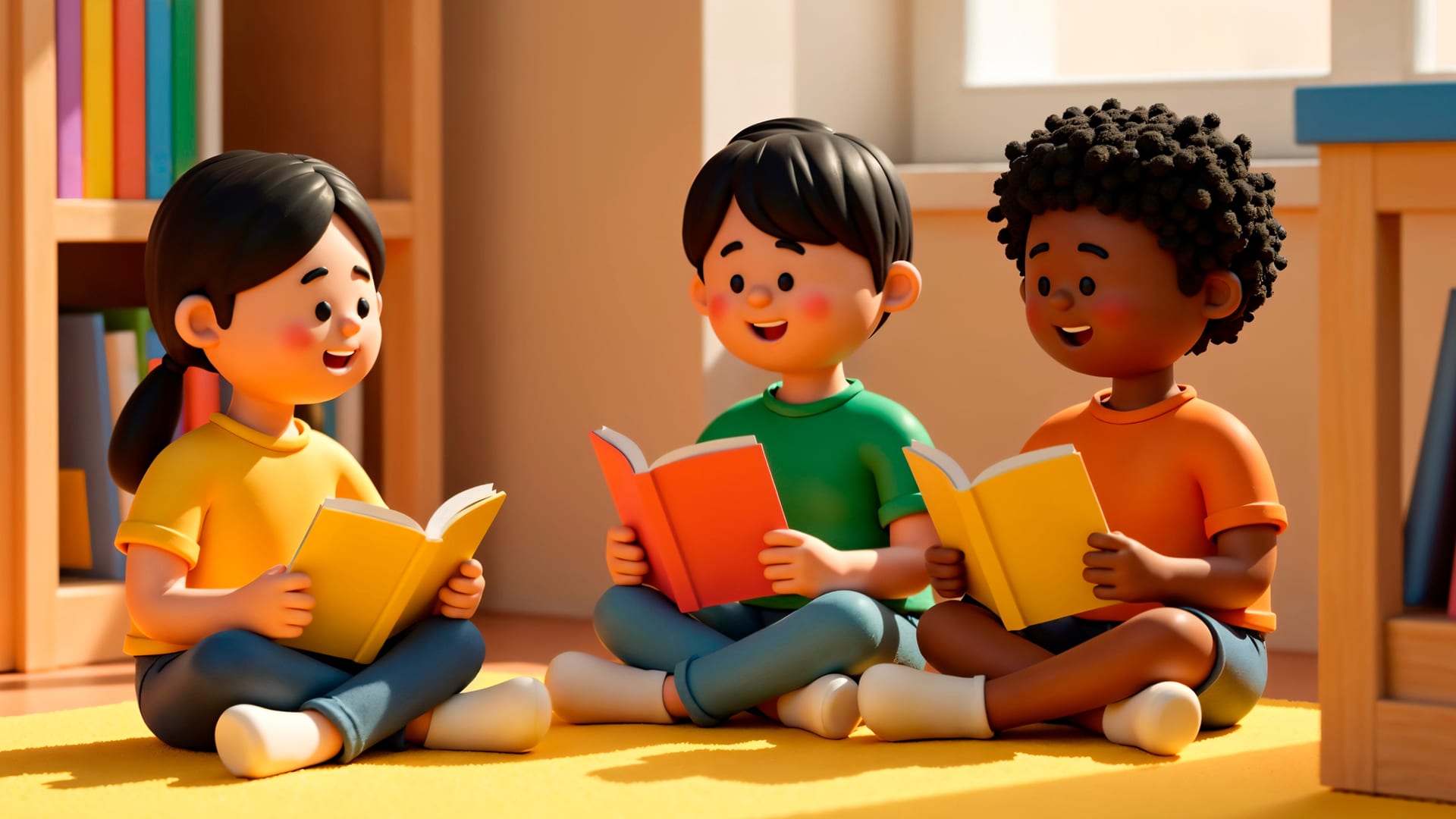
A classroom scene can feel full of life when it includes backpacks, drawings, books, desks, and different facial expressions. Bright colors make the setting feel welcoming. This kind of illustration is useful for stories about friendship, confidence, first school days, or classroom lessons.
A child standing in a large forest, beside a tall building, or under a wide sky can create an immediate feeling of wonder. The contrast between the small character and the large setting helps show bravery, uncertainty, and growth without needing too many words.
Book illustration can help represent cultural moments with care. Clothing, food, patterns, music, family roles, and setting details can make a celebration scene feel rich and respectful. The key is specificity. Real visual details make the scene feel lived-in rather than generic.
Children respond quickly to expressive faces and body language. Wide eyes, raised eyebrows, slumped shoulders, or a dramatic fall can make a page funny without needing a long explanation. This style is perfect for silly stories, classroom read-alouds, and character-led picture books.
Some picture book art becomes more exciting when readers can return to it and notice something new. Hidden stars, tiny creatures, background clues, or repeated symbols can make each reading feel fresh. These details help children stay engaged and reward close looking.
Fantasy illustration often begins with character design. A warrior, prince, witch, or traveler can reveal a lot through clothing, posture, expression, and props. A cracked sword, old boots, or a glowing necklace can suggest history before the story explains it.
A creature illustration works best when it feels powerful and believable. Scale matters here. A dragon towering over trees or curling around a mountain can create instant drama. Texture, wings, claws, smoke, and lighting can make the creature feel dangerous, ancient, or mysterious.
An illustrated map can make a fictional world easier to understand. Mountains, rivers, kingdoms, roads, and symbols give readers a sense of place. For fantasy books and adventure novels, maps can support the plot and help readers follow movement across the story.
A character walking toward a glowing cave, a distant castle, or a stormy path can create strong visual momentum. Light helps guide the reader’s eye. Directional composition makes the scene feel active, even if the character is simply standing or walking.
A dark forest, secret city, or hidden kingdom can make the reader feel curious before anything happens. Shadow, fog, layered trees, small lights, and strange architecture can build mood. This type of book illustration is useful when the setting itself feels like part of the story.
Graphic novel art depends on pacing. A chase, fight, escape, or sudden discovery can feel faster through angled panels, close-ups, movement lines, and changing frame sizes. The reader’s eye moves from one moment to the next, almost like watching a scene unfold.
Color is not always needed to create impact. A black-and-white scene can feel intense when it uses contrast, silence, facial expression, and shadow well. This style works especially well for grief, fear, tension, or quiet reflection.
A character holding an empty coat, standing beside an unused chair, or watching a fading light can express grief without stating it directly. Symbolic book illustration gives readers space to feel the emotion instead of being told how to feel.
Retro poster-style art can create a bold and memorable look. Limited colors, clean shapes, strong outlines, and confident typography can make a character feel iconic. This style works well for adventure books, historical fiction, satire, and genre-inspired covers.
A room floating in water, a staircase leading into the sky, or a character holding a tiny city can create a surreal effect. This kind of illustration is useful for literary fiction, poetry, and books with dreamlike or symbolic themes.
Art Nouveau-inspired illustration often uses flowing lines, decorative borders, nature-based shapes, and elegant framing. It can make a character feel graceful, mysterious, or timeless. This style works well for romance, fantasy, mythology, and special edition books.
A single object can introduce a chapter beautifully. A key, feather, candle, crown, letter, or broken mirror can hint at what is coming next. Chapter opener illustrations are often simple, but they can add rhythm and polish to the reading experience.
Minimal book illustration proves that a page does not need to be crowded to feel powerful. A small figure in an empty room or one red balloon against a blank background can create focus. White space helps the reader pause and notice what matters.
Educational illustration should make information easier, not harder. A clear science diagram, labeled plant, body system, or space concept can help readers understand complex ideas. Clean lines, simple colors, and organized labels matter more than heavy detail.
Historical book illustration depends on research. Clothing, architecture, tools, furniture, and transportation need to match the time period. Accurate details help readers trust the book and understand the world being described.
Some nonfiction ideas are difficult to show directly. Concepts like anxiety, focus, memory, or confidence can be explained through visual metaphor. A tangled thread, open door, stacked boxes, or split path can help readers understand abstract ideas quickly.
A strong book cover illustration should capture the main feeling of the book. It does not have to explain the entire plot. It should tell readers what kind of experience to expect. A lonely road, a bright city, a hidden face, or a magical object can create the right first impression. Such creativity in book cover illustration is what you can expect when you partner with Virginia Book Publisher.
A picture book for young children usually needs clear shapes, expressive faces, and easy-to-follow action. A middle-grade book may use more detail, humor, and adventure. A young adult or adult illustrated book can use more symbolic, complex, or restrained visuals.
Not every book needs full-page illustrations. Some books work better with small spot illustrations placed beside the text. Others benefit from chapter openers or occasional full spreads. The right format depends on the book’s length, budget, genre, and reading level.
Color often shapes emotion before readers notice fine detail. A bright palette can feel playful. Earth tones can feel grounded. Deep blues and purples can feel mysterious. Before choosing an illustration style, authors should think about the emotional role of color.
If the same character appears throughout the book, consistency matters. Face shape, hairstyle, clothing, height, posture, and expression style should remain recognizable. Inconsistent character design can distract readers and weaken the visual storytelling.
Interior illustration should work with the words, not fight them. Artists and authors need to consider margins, trim size, bleed, page turns, and text placement. A beautiful illustration can still fail if the words become hard to read.
A good illustration brief helps the project run smoothly. Authors should include the manuscript summary, target age group, genre, number of illustrations, preferred style, page size, references, timeline, and budget. Clear direction helps the illustrator create art that fits the book.
Beautiful book illustration is not just about making a book look attractive. It is about helping the reader feel the story, understand the message, and remember the experience. The best illustrations support the words while adding something the words cannot fully do on their own.
For authors, the main goal is to choose art that fits the book. A children’s story may need warmth and expression. A fantasy book may need scale and atmosphere. A nonfiction book may need clarity. A literary book may need symbolism. When the illustration style matches the book’s purpose, the result feels natural and professional.
Book illustration can shape how readers see a character, understand a scene, and connect with the author’s work. Whether the book uses full-page art, simple chapter openers, detailed maps, or a striking cover image, the right visuals can make the reading experience stronger from the first glance to the final page.
How many illustrations does a children’s picture book usually need?
A standard 32-page children’s picture book usually needs 12 to 16 full spreads or around 24 to 28 individual illustrations, depending on the layout, text length, and page design.
What file format should authors request from a book illustrator?
Authors should request print-ready files in high-resolution PDF, TIFF, or PNG format, usually at 300 DPI. They should also ask for editable source files if future changes may be needed.
Should book illustrations be created before or after the manuscript is edited?
Book illustrations should be created after the manuscript is fully edited. This avoids paying for artwork that may no longer fit if scenes, page breaks, characters, or text placement change later.
Who owns the rights to book illustrations after the project is complete?
Rights depend on the contract. Some illustrators provide full copyright transfer, while others offer limited usage rights for print, ebook, marketing, or merchandise. Authors should confirm rights in writing before the project starts.
Do authors need separate illustrations for print books and ebooks?
Usually, the same artwork can be used for both, but the files may need different formatting. Print books need proper bleed, trim, and high-resolution files, while ebooks need optimized digital files for fast loading and clear display.
How much creative direction should an author give an illustrator?
Authors should provide clear direction on character details, mood, audience, setting, and important scenes, but they should also leave room for the illustrator’s creative judgment. Over-directing every detail can make the artwork feel stiff.
Should an illustrator be credited on the book cover?
For picture books, graphic novels, and heavily illustrated books, the illustrator is usually credited on the cover. For books with only a few interior illustrations, the credit may appear on the copyright page or title page.
What should be included in a book illustration contract?
A book illustration contract should include the number of illustrations, payment terms, timeline, revision limits, ownership rights, usage permissions, file formats, cancellation terms, and credit requirements.